
Citrus paradisi antimicrobial activity: an integrative review
DOI:
https://doi.org/10.70151/de42qh79Keywords:
Anti-infectious agents, Dentistry, Citrus paradisiAbstract
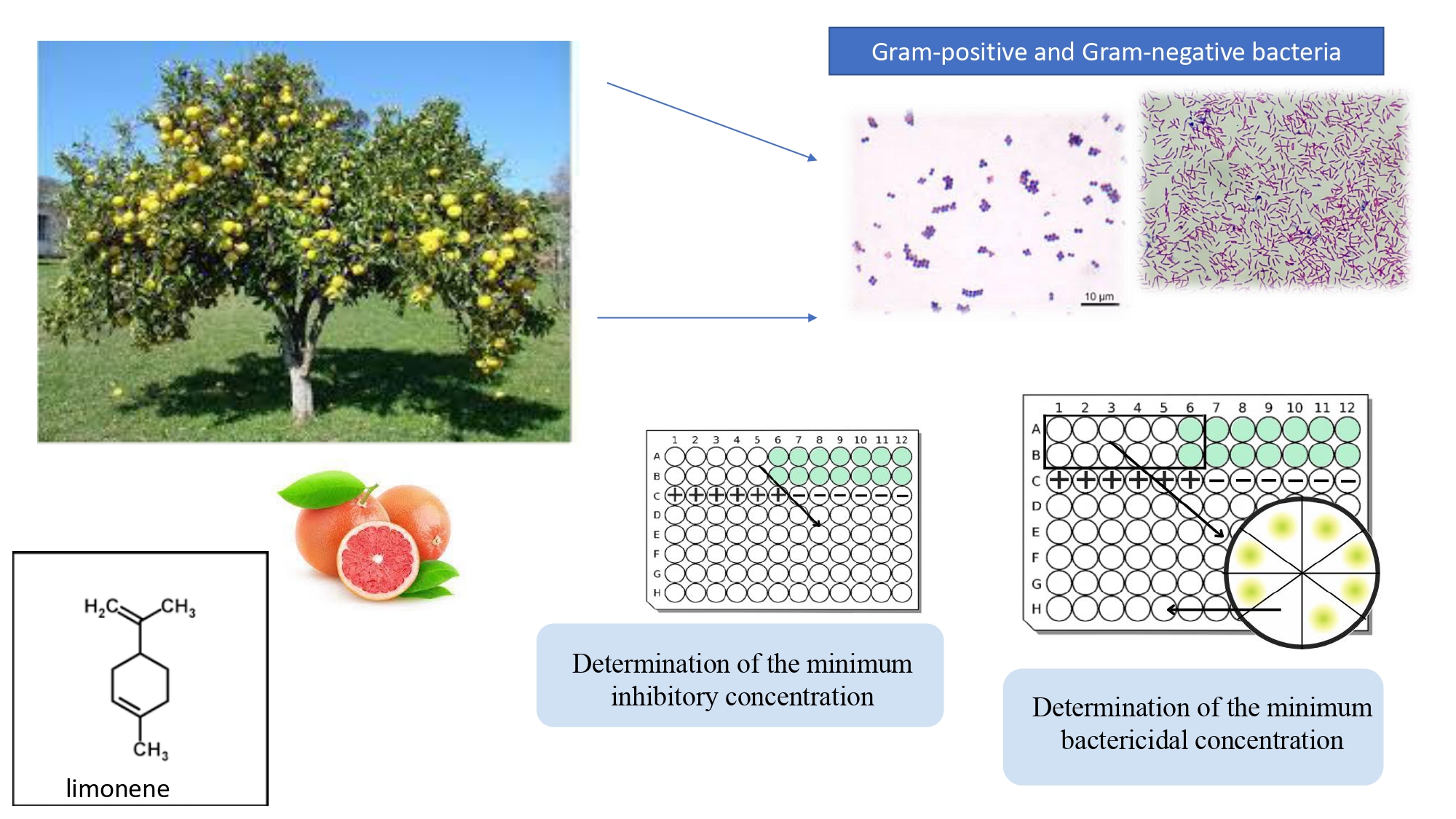
Recent search for medicinal and nutritional alternatives has highlighted the search for local plants with beneficial properties in a specific region. Consequently, several surveys have assessed the potential and health benefits of such plants. In the present, we conducted a literature review on the potential medicinal and nutritional use of Citrus paradisi on the databases of PubMed, EMBASE, Biblioteca Virtual em Saúde (BVS), Cochrane Library, and Web of Science using the descriptors selected in MeSH, DeCs, and Entree. The searches were conducted in October 2022. The inclusion criterion applied for the enrolled articles were publication in the last 10 years, excluding literature reviews and case studies. Subsequently, 4 articles were selected for the present literature review. Based on our review, Ci. paradisi has so far presented with promising outcomes against pathogenic bacteria such as Escherichia coli, Pseudomonas aeruginosa, Salmonella spp., Helicobacter pilori, and Enterococcus faecalis. These study results suggested differences in the action of the extracts from this plant on Staphylococcus aureus, although no effect was recorded against the bacteria Typhimurium spp., Listeria monocytogenes, and Staphylococcus epidermitis. Regarding fungi, Candida albicans, Candida glabrata, Aspergillus fumigatus, and Scedosporium apiospermum were found to be sensitive to grapefruit essential oil, while Fusarium avenaceum, F. culmorum, F. graminearum, and F. oxysporum were found to be resistant. Thus, this plant possesses an antimicrobial potential against some microorganisms, albeit further studies are warranted for a more efficient analysis of the action against bacteria and before its potential clinical application.
Downloads
References
Arsène M, Podoprigora, IV, Davares A, Razan M, Das MS, Senyagin AN (2021) Antibacterial activity of grapefruit peel extracts and green-synthesized silver nanoparticles. Vet World 14(5):1330–1341. https://doi.org/10.14202/vetworld.2021.1330-1341
Deng W, Liu K, Cao S, Sun J, Zhong B, Chun J (2020) Chemical composition, antimicrobial, antioxidant, and antiproliferative properties of grapefruit essential oil prepared by molecular distillation. Molecules 25(1):217-230. https://doi.org/10.3390/molecules25010217
Denkova-Kostova R, Teneva D, Tomova T, Goranov B, Denkova Z, Shopska V, Slavchev A, Hristova-Ivanova Y (2020) Chemical composition, antioxidant and antimicrobial activity of essential oils from tangerine (Citrus reticulata L.), grapefruit (Citrus paradisi L.), lemon (Citrus lemon L.) and cinnamon (Cinnamomum zeylanicum Blume). Z Naturforsch C J Biosci 23:175-185. https://doi.org/10.1515/znc-2020-0126
Fejerskov O, Kidd E, Nyvad B (2017) Cárie Dentária - Fisiopatologia e Tratamento. 3ed. Rio de Janeiro: San Saúde Profissional. 530p.
Filoche SK, Soma K, Sissons CH (2005) Antimicrobial effects of essential oils in combination with chlorhexidine digluconate. Oral Microbiol Immunol 20(4):221-5. https://doi.org/10.1111/j.1399-302X.2005.00216.x
Francisco KSF (2010). Fitoterapia: Uma opção para o tratamento odontológico. Rev Saúde 4(1):18-24.
Garbin VP, Munguía B, Saldaña JC, Deschamps C, Cipriano RR, Molento MB (2021) Chemical characterization and in vitro anthelmintic activity of Citrus bergamia Risso and Citrus X paradisii Macfad essential oil against Haemonchus contortus Kirby isolate. Acta Trop 21,105869. https://doi.org/10.1016/j.actatropica.2021.105869.
Haffajee AD, Yaskell T, Socransky SS (2008) Antimicrobial effectiveness of an herbal mouthrinse compared with an essential oil and a chlorhexidine mouthrinse. J Am Dent Assoc 139(5): 606–611. https://doi.org/10.14219/jada.archive.2008.0222
Hammer KA, Dry L, Johnson M, Michalak E, Carson CF, Riley TV (2003) Susceptibility of oral bacteria to Melaleuca alternifolia (tea tree) oil in vitro. Oral Microbiol Immunol 18(6):389–392. https://doi.org/10.1046/j.0902-0055.2003.00105.x
Marcenes W, Kassebaum NJ, Bernabé E, Flaxman A, Naghavi M, Lopez A, Murray CJ (2013) Global burden of oral conditions in 1990-2010: a systematic analysis. J Dent Res 92(7):592–597. https://doi.org/10.1177/0022034513490168
Marsh PD, Lewis MAO, Rogers H, Williams DW, Wilson M (2018) Microbiologia Oral. 6ed. São Paulo: Editora Santos. 571p.
Martins M, McCusker MP, Viveiros M, Couto I, Fannung S, Pagès J-M, Amaral L (2013) A Simple method for assessment of MDR bacteria for over-expressed efflux pumps. Open Microbiol J 22(7):72-82. https://doi.org/10.2174/1874285801307010072
Miller WD (1973) The Micro-Organisms of the Human Mouth. Basel: S. Karger. 225–237.
Ou MC, Liu Y, Sun YW, Chan CF (2015) The composition, antioxidant and antibacterial activities of cold-pressed and distilled essential oils of Citrus paradisi and Citrus grandis (L.) Osbeck. Evid Based Complementary Alternat Med 804091. https://doi.org/10.1155/2015/804091
Pekmezovic M, Aleksic I, Barac A, Arsic-Arsenijevic V, Vasiljevic B, Nikodinovic-Runic J, Senerovic L (2016) Prevention of polymicrobial biofilms composed of Pseudomonas aeruginosa and pathogenic fungi by essential oils from selected Citrus species. Pathog Dis 74(8): ftw102. https://doi.org/10.1093/femspd/ftw102
Pereira AS (2018) Metodologia da pesquisa científica. UFSM .1ed. Santa Maria; UFSM, NTE,119.
Shankar S, Rhim JW (2018) Preparation of antibacterial poly(lactide)/poly(butylene adipate-co-terephthalate) composite films incorporated with grapefruit seed extract. Int J Biol Macromol 120(PtA):846–852. https://doi.org/10.1016/j.ijbiomac.2018.09.004
Takarada K, Kimizuka R, Takahashi N, Honma K, Okuda K, Kato T (2004) A comparison of the antibacterial efficacies of essential oils against oral pathogens. Oral Microbiol Immunol 19(1):61–64. https://doi.org/10.1046/j.0902-0055.2003.00111.x
Tsui W, Wong RW, Rabie AB (2008) The inhibitory effects of naringin on the growth of periodontal pathogens in vitro. Phytother Res 22(3):401–406. https://doi.org/10.1002/ptr.2338
Žlabur JŠ, Žutić I, Radman S (2020) Effect of different green extraction methods and solvents on bioactive components of chamomile (Matricaria chamomilla L.) flowers. Molecules 25(4):810-814. https://doi.org/10.3390/molecules25040810
Song YJ, Yu HH, Kim YJ, Lee NK, Paik HD (2019) Anti-biofilm activity of grapefruit seed extract against Staphylococcus aureus and Escherichia coli. J Microbiol Biotechnol 29(8):1177–1183. https://doi.org/10.1041/jmb.1905.05022
Vikram A, Jesudhasan PR, Jayaprakasha G, Pillai, B, Patil BS (2010) Grapefruit bioactive limonoids modulate E. coli O157:H7 TTSS and biofilm. Int J Food Microbio 140(2-3):109–116. https://doi.org/10.1016/j.ijfoodmicro.2010.04.012
Downloads
Published
Issue
Section
License

This work is licensed under a Creative Commons Attribution-NonCommercial-NoDerivatives 4.0 International License.