The influence of harvest time, drying systems and fruit layer on total flavonoid content in fava-d'anta (Dimorphandra mollis Benth.)
DOI:
https://doi.org/10.70151/chge9021Keywords:
Dimorphandra mollis, total flavonoid, extractivism, medicinal plantsAbstract
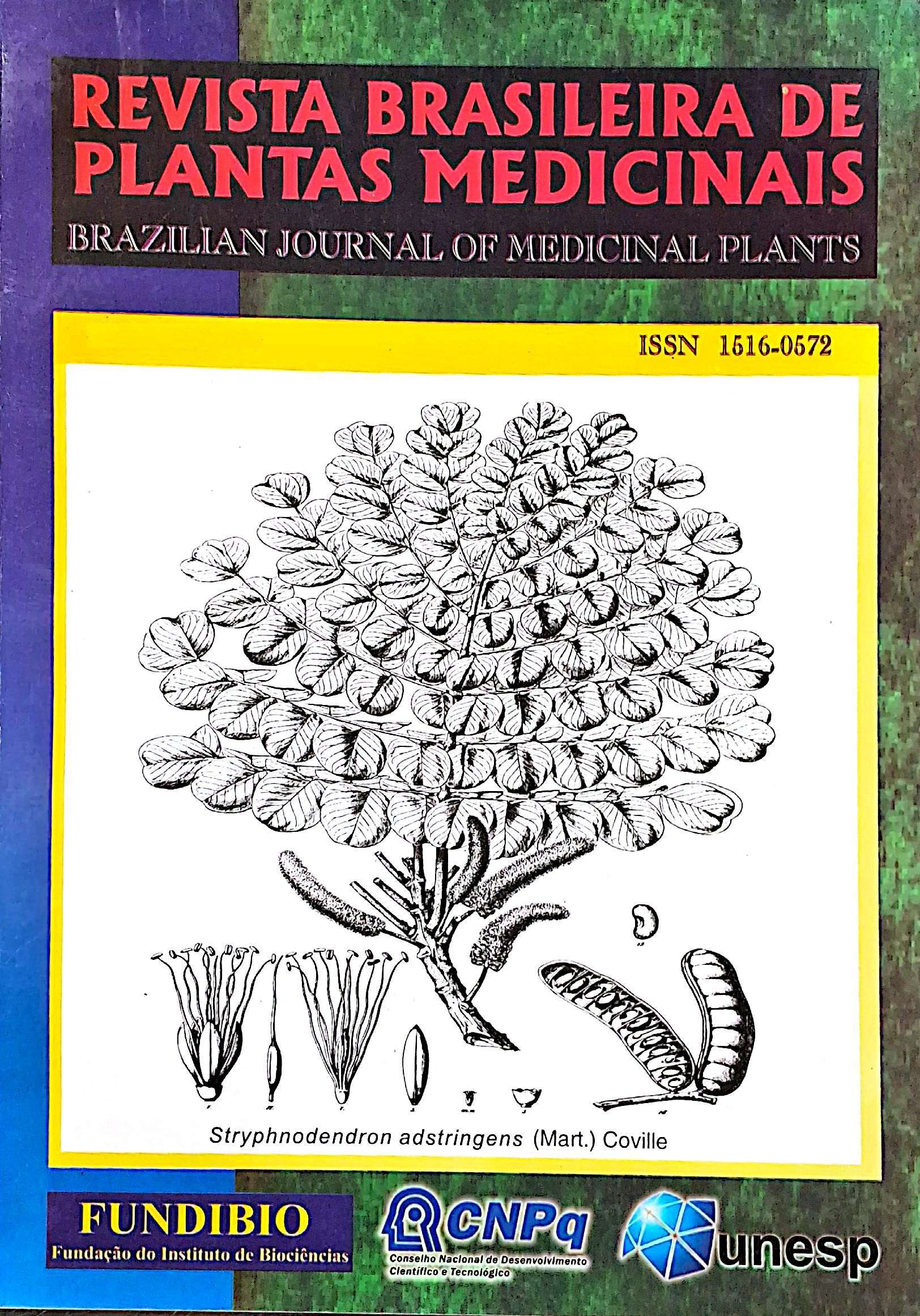
Fava d'anta (Dimorphandra mollis Benth.), a medicinal species of high economic potential is largely explored to supply the pharmaceutical industry with the flavonoid rutin. The present paper had three objectives: 1) to evaluate the effect of harvest time on the morphological characteristics and the total flavonoid content; 2) to evaluate the fruit drying systems; 3) to determine the flavonoid content, the yields of the epicarp plus the mesocarp (EM), and of the endocarp plus the seeds (ES) of fava d'anta from different origins. The first study was carried out in randomized block design with 10 replications, having as plot the plant. Fruits were dried in three systems: under the sun, in oven with forced air flow at 45 °C, and at 65 °C. After drying, the fruit were grounded and submitted to flavonoid extraction. The total flavonoid content was determined by visible spectrophotometry (425 nm) using rutin in the preparation of the calibration curve. The second study was carried out in randomized block design in four replicates and three treatments, with 26-day harvest intervals. Besides observating the prevailing color of the harvested fruit; there was also measured the length, width and total flavonoid content. In the third assay, fruit of ten populations were evaluated after drying. EM and ES portions were separated, weighed, grounded and submitted to flavonoid extraction and total flavonoid analysis. No significant effect of the drying system on the total flavonoid content was observed (8.0 ± 1.3%). The total flavonoid content varied significantly only between sarnpling periods, being higher in the first one (11 ± 3%) when the fruit were dark green. The EM portion present total flavonoid content of 42.43 ± 8.26%, and the ES portion presented significantly lower average (1.41 ± 1.27%). According to these results, it was possible to conclude that the fruit must be harvested in the stage indicated by their dark green color and the traditional drying system used does not affect the fruit quality.
Downloads
References
GOMES, L.J. Extrativismo e comercialização da Fava-d'anta (Dimorphandra sp): um estudo de caso na região de cerrado de Minas Gerais. Lavras:UFLA, 1998.158p.
OLIVEIRA, F.O., AKISUE, G., AKISUE, Μ.Κ. Farmacognosia. São Paulo: Atheneu, 1998. 412p.
PANEGASSI, V.R., SERRA, G.E.. BUCKERIDGE, M.S. Potencial tecnológico do galactomanano de sementes de faveiro (Dimorphandra mollis) para uso na indústria de alimentos. Ciência e Tecnologia de Alimentos, v.20, n.3, p.406-15, 2000.
SANTOS, M.D., BLATT, C.T.T. Teor de flavonóides e fenóis totais em folhas de Pyrostegia venusta Miers, de mata e de cerrado, Revista Brasileira de Botânica, v.21, n.2, p.1-9, 1998.
SOUSA, M.P. Constituintes químicos de plantas medicinais. Fortaleza: EUFC, 1991.416p.
Downloads
Published
Issue
Section
License

This work is licensed under a Creative Commons Attribution-NonCommercial-NoDerivatives 4.0 International License.