
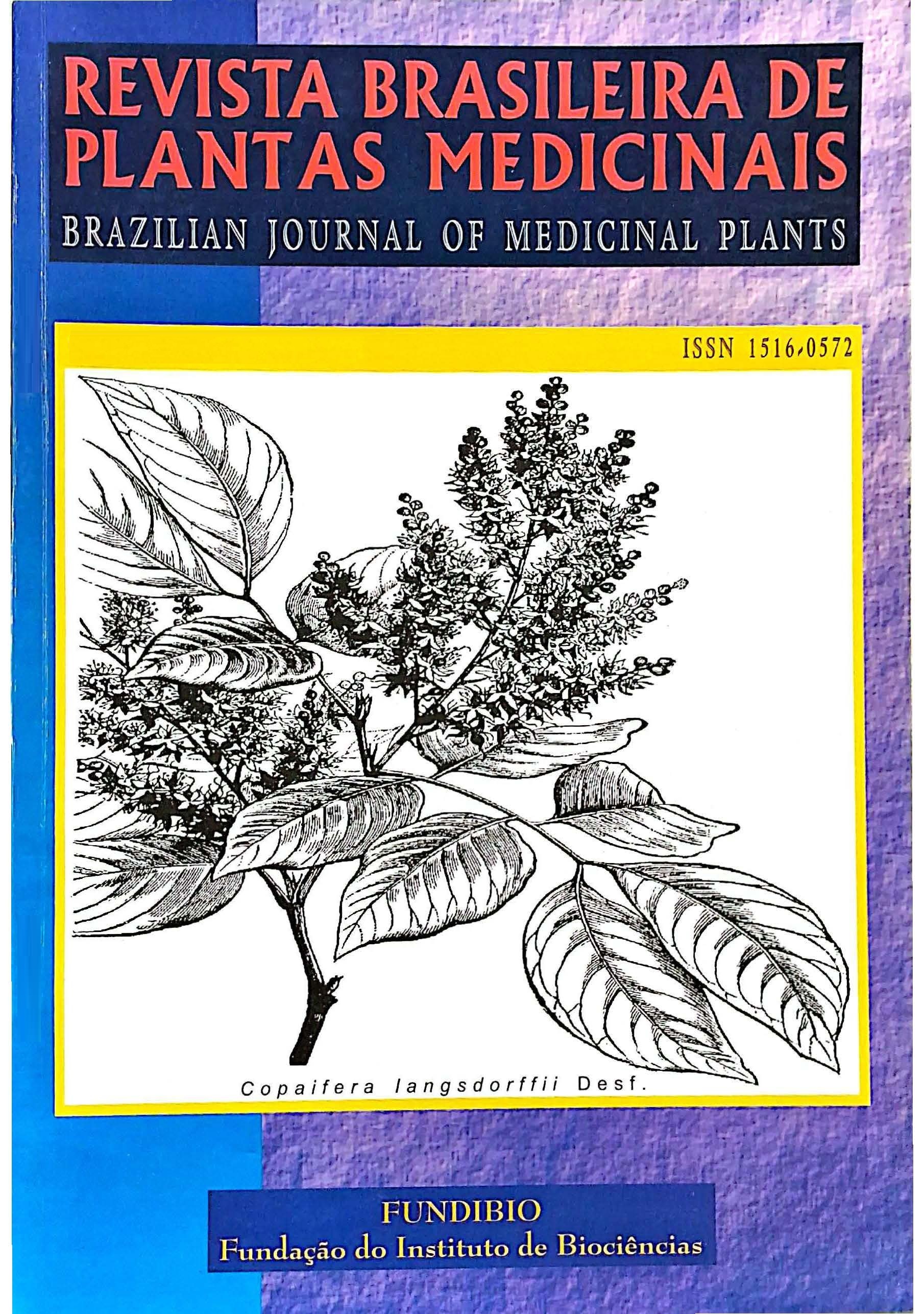
Toxic and mutagenic activity of oleoresin of Copaiba (Copaifera langsdorfii Desfon) in mice
DOI:
https://doi.org/10.70151/z6gvgb44Keywords:
mutagenicity tests, micronuclei, mice, medicinal plantsAbstract
The oleoresin of Copaiba, Copaifera langsdorfii Desfon, which has been used by the Brazilian population for treatment of cancer, ulcer, syphilis, bronchitis, and diarrhea, showed a potent anti-tumor activity against IMC carcinoma in mice. In this present study, the aim was to evaluate the mutagenic activity and the cyto-toxicity of the oleoresin of "copaiba" in the mouse, with the bone marrow micronucleus test. Doses of oleoresin of 2.11ml/kg (25% of LD50), 4.22mL/kg (50% of LD50), and 6.76mL/kg (80% of LD50) were given by oral administration to mice Mus musculus in groups of 7 animals for each treatment. For all the doses, micronucleated polychromatic erythrocytes frequency (MNPCE) was evaluated at periods of 24, 48, and 72 hours. Cytoxicity was evaluated polychromatic and normo-chromatic erythrocytes ratio (PCE and NCE). Results showed that the oleoresin in doses of 4.22 mL/kg, (50% of LD50) and 6.76mL/kg (80% of LD50) increased significantly (p<0.001) the frequency of MNPCE compared to negative control group. In relation to the administered time, the maximum frequency of induction of MNPCE was observed in 24h. These results indicate that the oleoresin of "copalba" exhibited mutagenic activity, Cytotoxicity was evident in all dosages applied.
Downloads
References
FREIBURGHAUS, F., STECK, A., PFANDER, H. et al. Bioassay-guided isolation of a diastereoisomer of kolavenol from Entada abyssinica active on Trypanosoma brucei rhodesiense. Journal of Ethnopharmacology, v.61, n.3, p.179-83, 1998.
HEDDLE, J.A. A rapid in vivo test for chromosomal damage. Mutation Research, v.18, p.187-90, 1973.
HEDDLE, J. A., HITE, M., KIRKHART, B. et al. The induction of micronuclei as a measure of genotoxicity. A report of the U.S. environmental protection agency gene-tox. Mutation Research, v.123, p.61-118, 1983.
MAVOURNIN, K. H., BLAKEY, D.H., CIMINO, M.C. et al. The in vivo micronucleus assay in mammalian bone marrow and peripheral blood. A report of the U.S. Environmental Protection Agency Gene-Tox program. Mutation Research, v.239, p.29-80, 1990.
OHSAKI, A., YAN, L.T., ITO, S. et al. The isolation and in-vivo potent antitumor-activity of clerodane diterpenoid from the oleoresin of the brazilian medicinal plant, Copaifera langsdorfii Desfon. Biorganic and Medicinal Chemistry Letters, v.4, п.24, p.2889-92, 1994.
PECKOLT, G. As dez árvores genuinamente brasileiras úteis na medicina. Revista Flora Medicinal, v.9, p.453-70, 1942.
PIO CORREIA, M. Dicionário das plantas úteis do Brasil e das exóticas cultivadas. Rio de Janeiro: Imprensa Nacional, 1969. v.5.
RABELLO-GAY, M.N., ROGRIGUES, M.A.L.R., MONTELEONE-NETO, R. Mutagênese, Teratogênese e Carcinogênese: métodos e critérios de avaliação. Ribeirão Preto: Sociedade Brasileira de Genética, 1991. 241p..
SENA, M.A. Atividade tóxica e genotóxica do óleo da Copaifera langsdorfii Desfon (Pau do óleo) em camundongos. 1997. 76p. Dissertação (Mestrado em Biologia) - Universidade Federal de Goiás, Goaiânia.
SENA, M.A., CHEN, L.C. Avaliação da atividade anticolinesterase do óleo de copaíba em plasmas de camundongos. In: SIMPÓSIO DE PLANTAS MEDICINAIS DO BRASIL 15., 1998, Águas de Lindóia. Livro de Resumo... Águas de Lindóia, 1998. p.173.
TINWELL, H., ASHBY, J. Micronucleus morphology as a means to distinguish aneugens and clastogens in the mouse bone marrow micronuclues assay. Mutagenesis, v.6, p. 193-8, 1991.
YAMAMOTO, K., KIKUCHI, Y.A comparison of diameters of micronuclei induced by clastogens and by spindle poisons. Mutation Research, v. 71, p.127-31, 1980.
Downloads
Published
Issue
Section
License

This work is licensed under a Creative Commons Attribution-NonCommercial-NoDerivatives 4.0 International License.