Antibacterial activity of Vitex cymosa extracts and identification of ayanin
DOI:
https://doi.org/10.70151/34mttt61Keywords:
Bioprospection, Phytochemistry, Thin Layer Chromatography, Nuclear Magnetic Resonance, Flavonoid, Staphylococcus aureusAbstract
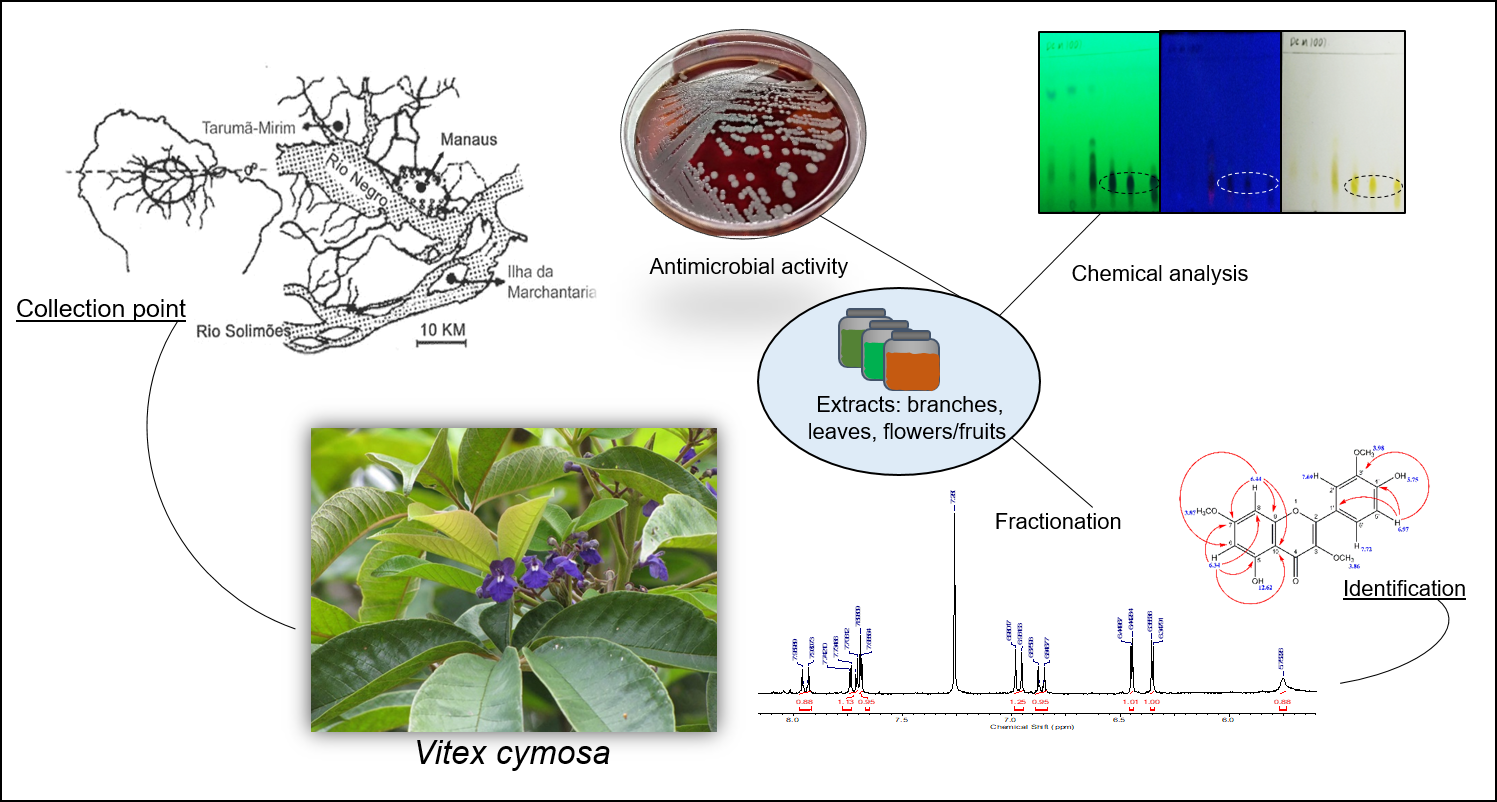
Vitex cymosa Bertero ex Spreng., a species that belongs to Lamiaceae family, is known for producing iridoids and flavonoids, which exhibit therapeutic properties, including antioxidant and antimicrobial activities. Since several bacteria strains are developing resistance to the commercially available antibiotics it is of great importance to perform bioprospection studies aiming to evaluate plant extracts and isolate the active substances. This research evaluated V. cymosa extracts against Staphylococcus aureus and against the bioindicator Artemia salina and fractionated the methanolic extract of its flowers and fruits. The results demonstrated that the hexane and methanolic extracts from the branches, leaves, and flowers/fruits of V. cymosa inhibited S. aureus growth up to 93% and they were non-toxic against A. salina. Fractionation of the methanolic extract of the flowers/fruits led to the isolation of the flavone ayanin, a compound with various biological applications. This is the first report of the isolation of ayanin in the genus Vitex. These findings support further studies on V. cymosa, particularly in the context of developing new antibiotic agents.
Downloads
Downloads
Published
Issue
Section
License
Copyright (c) 2025 Revista Brasileira de Plantas Medicinais

This work is licensed under a Creative Commons Attribution-NonCommercial-NoDerivatives 4.0 International License.