The potential use of phenolic compounds in the treatment of hair loss: a literature review
DOI:
https://doi.org/10.70151/n40pev13Keywords:
Alopecia, Clinical trial, Medicinal plants, Polyphenols, ReviewAbstract
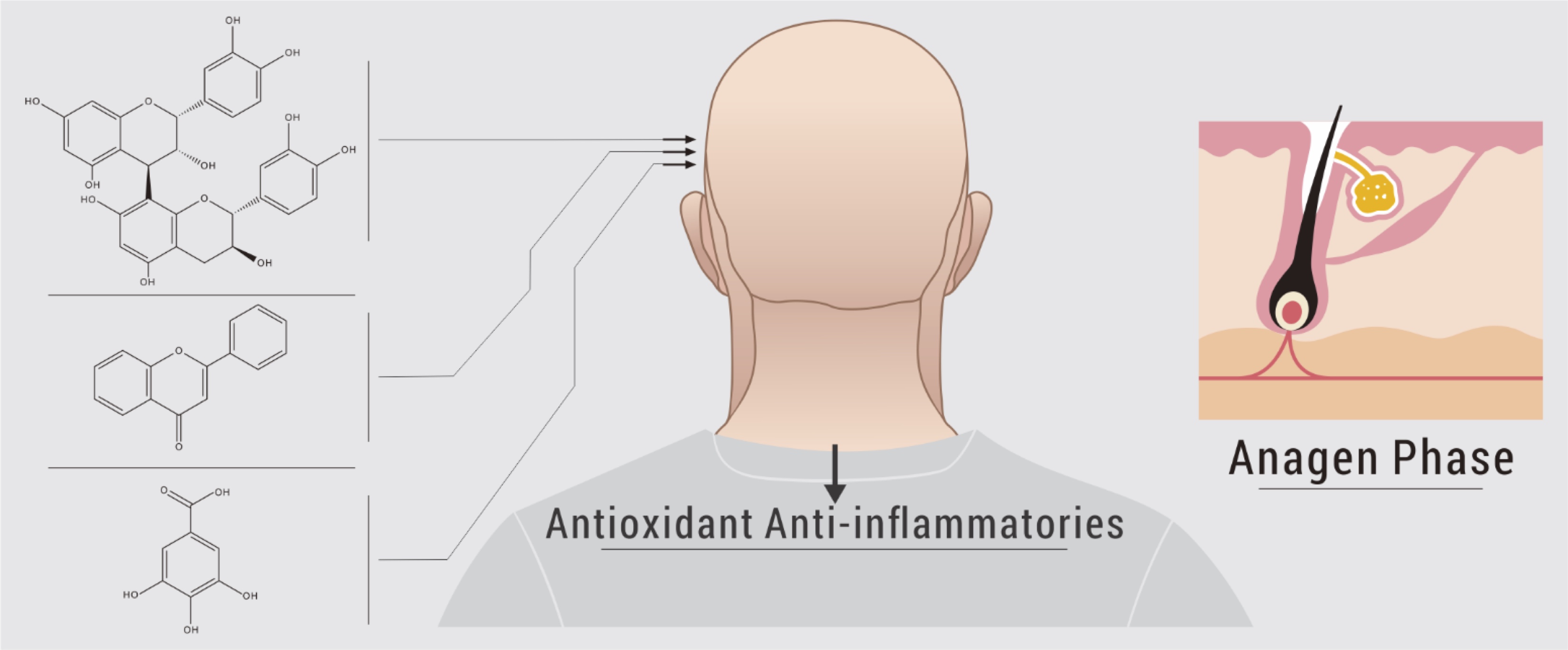
Hair loss is a condition that affects both men and women, causing psychological and physical suffering. This literature review aimed to bring together in vivo studies and clinical trials related to the use of phenolic compounds, mainly tannins, flavonoids, and metabolites from the phenolic acid class to combat hair loss. The bibliographic search was carried out in the PubMed/MEDLINE and Scopus databases, using keywords such as “flavonoids”, “tannins”, “phenolic acid” and “hair loss”. Regarding the clinical trials included, three types of study were used (randomized, double-blind, and placebo control). All the compounds evaluated were obtained from medicinal plants, three tannins and one flavonoid. The formulations evaluated were three hair tonics and one lotion, and phenolic compounds from procyanidin class were present in almost all articles (n=3). The use of these compounds was related to the reported potent antioxidant and anti-inflammatory activity, which favor the anagen phase of hair, reducing reactive oxygen species and inflammation of hair follicles. Therefore, more studies are needed to promote and discuss the use of phenolic compounds for hair loss, mainly through randomized clinical trials. To contribute to the research and development of new medicines, polyphenols have several benefits and have a similar action to conventional medicines.
Downloads
References
Abbasi AM, Khan MA, Ahmad M, Zafar M, Jahan S, Sultana S (2010) Ethnopharmacological application of medicinal plants to cure skin diseases and in folk cosmetics among the tribal communities of North-West Frontier Province, Pakistan. J Ethnopharmacol 128(2):322-335. https://www.doi.org/10.1016/j.jep.2010.01.052
Arnoso BJM, Da Costa GF, Schmidt B (2019) Bioavailability and classification of phenolic compounds. Nutri Brasil 18(1):39. https://doi.org/10.33233/nb.v18i1.1432
Banka N, Bunagan MJK, Shapiro J (2013) Pattern Hair Loss in Men. Diagnosis and Medical Treatment. Dermatol Clin 31(1):129-140. https://doi.org/10.1016/j.det.2012.08.003
Bräunlich M, Slimestad R, Wangensteen H, Brede C, Malterud KE, Barsett H (2013) Extracts, anthocyanins and procyanidins from Aronia melanocarpa as radical scavengers and enzyme inhibitors. Nutrients 5(3):663-678. https://doi.org/10.3390/nu5030663
Brown SE, Bice C, Putnam WC, Leff R, Kulikova A, Nakamura A, Ivleva EL, Enkevort EV, Holmes T, Miingi N (2019) Human safety and pharmacokinetics study of orally administered icariin: randomized, double-blind, placebo-controlled trial. Nat Prod Commun 14(6). https://doi.org/10.1177/1934578X19856789
Chen L, Fan B, Gu H, Yang L, Li X (2022) Effects of Baicalin on Alopecia and the Associated Mechanism. BioMed Res Internat 2022:1-14. https://doi.org/10.1155/2022/3139123
Cho CE, Kim K (2020) A comprehensive review of biochemical factors in herbs and their constituent compounds in experimental studies on alopecia. J Ethnopharmacol 258:1-19. https://doi.org/10.1016/j.jep.2020.112907
Cos P, Bruyne T, Hermans N, Apers S, Berghe DV, Vlietinck AJ (2003) Proanthocyanidins in health care: current and new trends. Curr Med Chem 10:1345-1359. https://doi.org/10.2174/0929867043365288
Das AK, Islam MN, Faruk MO, Ashaduzzaman M, Dungani R (2020) Review on tannins: extraction processes, applications and possibilities. S Afr J Bot 135:58-70. https://doi.org/10.1016/j.sajb.2020.08.008
Dinda B, Dinda S, Dassharma S, Banik R, Chakraborty A, Dinda M (2017) Therapeutic potentials of baicalin and its aglycone, baicalein against inflammatory disorders. Eur J Med Chem 131(1):60-68. https://doi.org/10.1016/j.ejmech.2017.03.004
Dhariwala MY, E Ravikumar P (2019) An overview of herbal alternatives in androgenetic alopécia. J Cosmet Dermatol 18(4):966-975. https://doi.org/10.1111/jocd.12930
Esfandiari A, Kelly P (2005) The effects of tea polyphenolic compounds on hair loss among rodents. J Natl Med Assoc 97(6):816-818.
Gordon K, Tosti A (2011) Alopécia: evaluation and treatment. Clin Cosmet Investig Dermatol 4:101-106. https://doi.org/10.2147/CCID.S10182
Gupta AK, Mays RR, Versteeg SG, Shear NH, Piguet V, Piraccini BM (2019) Efficacy of off-label topical treatments for the management of androgenetic alopecia: a review. Clin Drug Investig 1-7. https://doi.org/10.1007/s40261-018-00743-8
Haber RS (2004) Pharmacologic management of pattern hair loss. Facial Plast Surg Clin North Am 12:181-189. https://doi.org/10.1016/j.fsc.2003.12.008
Harwood M, Danielewska-Nikiel B, Borzelleca JF, Flamm GW, Williams GM, Lines TC (2007) A critical review of the data related to the safety of quercetin and lack of evidence of in vivo toxicity, including lack of genotoxic/carcinogenic properties. Food Chem Toxicol 45(11):2179-2205. https://doi.org/10.1016/j.fct.2007.05.015
Hiipakka RA, Zhang H-Z, Dai W, Dai Q, Liao S (2002) Structure-activity relationships for inhibition of human 5a-reductases by polyphenols. Biochem Pharmacol 63:1165-1176. https://doi.org/10.1016/s0006-2952(02)00848-1
Jung YH, Chae CW, Choi GE, Shin HC, Lim JR, Chang HS, Park J, Cho JH, Park MR, Lee HJ, Han HJ (2022) Cyanidin 3-O-arabinoside suppresses DHT-induced dermal papilla cell senescence by modulating p38-dependent ER-mitochondria contacts. J Biomed Sci 29(1). https://doi.org/10.1186/s12929-022-00800-7
Kaufman KD, Olsen EA, Whiting D, Savin R, Villez R, Bergfeld W, Price VH, Neste DV, Roberts JL, Hordinsky M, Shapiro J, Binkowitz B, Gormley J (1998) Finasteride in the treatment of men with androgenetic alopecia. J Am Acad Dermatol 39(4):578-589. https://doi.org/10.1016/s0190-9622(98)70007-6
Kamimura A, Takashashi T (2002) Procyanidin B3, isolated from barley and identified as a hair-growth stimulant, has the potential to counteract inhibitory regulation by TGF-β1. Exp Dermatol 11(6):532-541. https://doi.org/10.1034/j.1600-0625.2002.110606.x
Kamimura A, Takahashi T, Watanabe Y (2000) Investigation of topical application of procyanidin B2 from apple to identify its potential use as a hair growing agent. Phytomedicine 7(6):529-536. https://doi.org/10.1016/S0944-7113(00)80040-9
Kang J, Choi YK, Koh Y, Hyun J, Kang J, Lee SK, Lee CM, Yoo E, Kang H (2020) Vanillic acid stimulates anagen signaling via the PI3K/Akt/ β-Catenin pathway in dermal papilla cells. Biomol Ther 28(4):354-360. https://doi.org/10.4062/biomolther.2019.206
Kim YE, Choi HC, Lee I, Yuk DY, Lee H, Choi BY (2016) 3 deoxysappanchalcone promotes proliferation of human hair follicle dermal papilla cells and hair growth in C57BL/6 mice by modulating WNT/β-catenin and STAT signaling. Biomol Ther 24(6):572-580. https://doi.org/10.4062/biomolther.2016.183
Kishimoto J, Nakazawa Y (2017) Hair physiology (hair growth, alopecia, scalp treatment, etc.). Cosmetic Science and Technology: Theoretical Principles and Applications, p. 767-780. https://doi.org/10.1016/B978-0-12-802005-0.00048
Kreindler TG, Cincinnati MD (1987) Topical minoxidil in early androgenetic alopecia. J Am Acad Dermatol 16(3):718-724. https://doi.org/10.1016/s0190-9622(87)70093-0
Kumar N, Goel N (2019) Phenolic acids: Natural versatile molecules with promising therapeutic applications. Biotechnol Rep 24:1-10. https://doi.org/10.1016/j.btre.2019.e00370
Kumar S, Pandey AK (2013) Chemistry and biological activities of flavonoids: An overview. Sci World J 2013:1-17. https://doi.org/10.1155/2013/162750
Loing E (2013) A new strategy to modulate alopecia using a combination of two specific and unique ingredients. J Cosmet Sci 64:45-58.
Lourith N, Kanlayavattanakul M (2013) Hair loss and herbs for treatment. J Cosmet Dermatol 12(3):210-222. https://doi.org/10.1111/jocd.12051
Magacho RV (2023) Stages of hair growth. Available in: <https://clinicaecirurgiacapilar.com.br/fases-de-crescimento-do-pelo/> Accessed on: April 4, 2023.
Nagasawa A, Wakisaka E, Kidena H, Nomura T, Hotta M, Taguchi H, Moriwaki S (2016) t-Flavanone improves the male pattern of hair loss by enhancing hair-anchoring strength: a randomized, double-blind, placebo-controlled study. Dermatol Ther 6(1):59-68. https://doi.org/10.1007/s13555-016-0101-1
Oliveira GK, Vicente MM, Otenio JK, Carneiro VPP, Gumy MP, Velasquez LG, Lourenço ELB, Jacomassi E (2019) Etnobotânica, etnofarmacologia e farmacologia das espécies Acanthaceae, Aizoaceae, Alismataceae e Amaranthaceae. Rev Fitos 13(4):314-337. https://doi.org/ 10.32712/2446-4775.2019.800
Panche AN, Diwan AD, Chandra SR (2016) Flavonoids: an overview. J Nutr Sci 5(47):1-15. https://doi.org/10.1017/jns.2016.41
Park AM, Khan S, Rawnsley J (2018) Hair biology: growth and pigmentation. Facial Plast Surg Clin North Am 2018:1-10. https://doi.org/10.1016/j.fsc.2018.06.003
Park KS (2021) Pharmacological effects of Centella asiatica on skin diseases: evidence and possible mechanisms. Evid Based Complementary Altern Med 2021:1-8. https://doi.org/10.1155/2021/5462633
Patel S, Sharma V, Chauhan NS, Thakur M, Dixit VK (2015) Hair growth: focus on herbal therapeutic agent. Curr Drug Discov Technol 12:21-42. https://doi.org/10.2174/1570163812666150610115055
Piraccini BM (2015) Evaluation of hair loss. Curr Probl Dermatol 47:10–20. https://doi.org/10.1159/000369398
Pietta PG (2000) Flavonoids as antioxidants. J Nat Prod 63:1035-1042. https://doi.org/10.1021/np9904509
Pereira AL (2016) Principais tipos de alopecias não cicatriciais e suas fisiopatogenias. Trabalho de Conclusão de Curso (TCC) em Estética – Universidade FUMEC, Minas Gerais, p. 1-18.
Putta S, Yarla NS, Kumar K, Lakkappa DB, Kamal MA, Scotti L, Scott MT, Ashraf GM, Rao BSB, Kumari S, Reddy GV, Tarasov VV, Imandi SB, Aliev G (2017) Preventive and therapeutic potentials of anthocyanins in diabetes and associated complications. Curr Med Chem 25(39):5347-5371. https://doi.org/10.2174/0929867325666171206101945
Raja PB, Rahim AA, Qureshi AK, Awang K (2014) Green synthesis of silver nanoparticles using tannins. Mater Sci-Pol 32(3):408-413. https://doi.org/10.2478/s13536-014-0204-2
Ramos PM, Miot HA (2015) Female pattern hair loss: A clinical and pathophysiological review. An Bras Dermatol 90(4):529-543. https://doi.org/10.1590/abd1806-4841.20153370
Rashmi HB, Negi PS (2020) Phenolic acids from vegetables: A review on processing stability and health benefits. Food Res Int 136:1-14. https://doi.org/ 10.1016/j.foodres.2020.109298
Riccio G, Sommella E, Badolati N, Salviati E, Bottone S, Campiglia P, Dentice M, Tenore GC, Stornaiuolo M, Novellino E (2018) Annurca apple polyphenols protect murine hair follicles from taxane induced dystrophy and hijacks polyunsaturated fatty acid metabolism toward β-oxidation. Nutrients 10(11):1-13. https://doi.org/10.3390/nu10111808
Rose PT (2021) Combination approaches for combatting hair loss. Dermatol Clin 39:479-485. https://doi.org/10.1016/j.det.2021.04.004
Ruksiriwanich W, Khantham C, Muangsanguan A, Chittasupho C, Rachtanapun P, Jantanasakulwong K, Phimolsiripol K, Sommano SR, Sringarm K, Ferrer E, Barba FJ (2022) Phytochemical constitution, anti‐inflammation, anti‐androgen, and hair growth‐promoting potential of shallot (Allium ascalonicum L.) Extract. Plants 11(11):1-14. https://doi.org/10.3390/plants11111499
Sandhya S, Chandrasekhar J, Banji D, Vinod KR (2012) Potentiality of hair growth promoting activity of aqueous extract of Abrus precatorius Linn. on Wistar albino rats. J Nat Remedies 12(1):1-11. https://doi.org/10.18311/jnr/2012/31
Sawaya ME, Price VH (1997) Different levels of 5α-reductase type I and II, aromatase, and androgen receptor in hair follicles of women and men with androgenetic alopecia. J Invest Dermatol 109(3):296-300. https://doi.org/10.1111/1523-1747.ep12335779
Shin SH, Bak S, Kim MK, Sung SK, Kim JC (2015) Baicalin, a flavonoid, affects the activity of human dermal papilla cells and promotes anagen induction in mice. Naunyn Schmiedebergs Arch. Pharmacol 388(5):583-586. https://doi.org/10.1007/s00210-014-1075-0
Shen Y-L, Li XQ, Pan R-R, Yue W, Zhang L-Y, Zhang H (2018) medicinal plants for the treatment of hair loss and the suggested mechanisms. Curr Pharm Des 24(26):3090-3100. https://doi.org/10.2174/1381612824666180911114810
Silva FP (2008) Caracterização fitoquímica e atividades biológicas de Centella asiatica (L.) Urban. 2008. Dissertação (Mestrado em Ciências Biológicas) – Universidade Federal de Juiz de Fora, Juiz de Fora.
Simakou, T.; Butcher, J. P.; Reid, S.; Henriquez, F. P. Alopecia areata: A multifactorial autoimmune condition. Journal of Autoimmunity.98, (1) 74-85. https://doi.org/10.1016/j.jaut.2018.12.001
Simões CMO, Shenkel EP, Gosmann G, Mello JCP, Mentz LA, Petrovick PR (2010) Farmacognosia: da planta ao medicamento. 5.ed. Porto Alegre/Florianópolis: Editora da UFRGS/Editora da UFSC, p. 519-629.
Škulj ZA, Poljšak N, Glavač NK, Kreft S (2020) Herbal preparations for the treatment of hair loss. Arch Dermatol Res 312:395-406. https://doi.org/10.1007/s00403-019-02003-x
Soares SE (2002) Phenolic acids as antioxidants. Rev Nutr 15(1):71-81.
Su YS, Fan ZX, Xiao SE, Lin BJ, Miao H, Hu ZQ, Liu H (2017) Icariin promotes mouse hair follicle growth by increasing insulin-like growth factor 1 expression in dermal papillary cells. Clin Exp Dermatol 42(3):287-294. https://doi.org/10.1111/ced.13043
Sun B, Wu L, Wu Y, Zhang C, Qin L, Hayashi M, Kudo M, Gao ME, Liu T (2020) Therapeutic potential of centella asiatica and its triterpenes: a review. Front Pharmacol 11:1-24. https://doi.org/10.3389/fphar.2020.568032
Takahashi T (2001) Biological actions of oligomeric procyanidins: proliferation of epithelial cells and hair follicle growth. Meth Enzymol 335(32):361-368. https://doi.org/10.1016/s0076-6879(01)35258-8
Takahashi T, Kamimura A, Kagoura M, Toyoda M, Morohashi M (2005) Investigation of the topical application of procyanidin oligomers from apples to identify their potential use as a hair-growing agent. J Cosmet Dermatol 4(4):245-249. https://doi.org/10.1111/j.1473-2165.2005.00199.x
Takahashi T, Kamimura A, Shirai A, Yokoo Y (2000) Several selective protein kinase C inhibitors including procyanidins promote hair growth. Skin Pharmacol Appl Skin Physiol 13:133-142. https://doi.org/10.1159/000029918
Takahashi T, Kamimura A, Yokoo Y, Honda S, Watanabe Y (2001) The first clinical trial of topical application of procyanidin B2 to investigate its potential as a hair growing agent. Phytother Res 15(4):331-336. https://doi.org/10.1002/ptr.800
Takahashi T, Kamiya T, Hasegawa A, Yokoo Y (1999a) Procyanidin oligomers selectively and intensively promote proliferation of mouse hair epithelial cells in vitro and activate hair follicle growth in vivo. J Invest Dermatol 112(3):310-316. https://doi.org/10.1046/j.1523-1747.1999.00532.x
Takahashi T, Kamiya T, Yokoo Y (1998) Proanthocyanidins from grape seeds promote proliferation of mouse hair follicle cells in vitro and convert hair cycle in vivo. Acta Derm Venereol 78:428-432. https://doi.org/10.1080/000155598442719
Takahashi T, Yokoo Y, Inoue T, Ishii A (1999b) Research section toxicological studies on procyanidin b2 for external application as a hair growing agent. Food Chem Toxicol 37:545-552. https://doi.org/10.1016/s0278-6915(99)00044-7
Tenore GC, Caruso D, Buonomo G, D’avino M, Santamaria R, Irace C, Piccolo M, Maisto M, Novellino E (2017) Annurca apple nutraceutical formulation enhances keratin expression in a human model of skin and promotes hair growth and tropism in a randomized clinical trial. J Med Food 1-14. https://doi.org/10.1089/jmf.2017.0016
Tsao R (2010) Chemistry and biochemistry of dietary polyphenols. Nutrients MDPI AG 2:1231-1246. https://doi.org/10.3390/nu2121231
Urzedo R (2020) O chá verde e suas propriedades: uma breve revisão bibliográfica abrangendo os anos de 2000 a 2020. Trabalho de conclusão de curso - Universidade federal de Uberlândia, Uberlândia. p. 1-40.
Vañó-Galván S, Camacho F (2017) Novedades terapéuticas en tricología. Actas Dermo-Sifiliogr 108(3):221-228. https://doi.org/10.1016/j.ad.2016.11.010
Vujovic A, Del Marmol V (2014) The female pattern hair loss: review of etiopathogenesis and diagnosis. BioMed Res Intern 2014:1-8. https://doi.org/10.1155/2014/767628
Wikramanayake TC, Villasante AC, Mauro LM, Perez CI, Schachner LA, Jimenez JJ (2012) Prevention and treatment of alopecia areata with quercetin in the C3H/HeJ mouse model. Cell Stress Chaperones 17(2):267-274. https://doi.org/10.1007/s12192-011-0305-3
Wolff H, Fischer TW, Blume-Peytavi U (2016) The diagnosis and treatment of hair and scalp diseases. Dtsch Arztebl Int 113(21):377-386. https://doi.org/10.3238/arztebl.2016.0377
Wren AF, Cleary M, Frantz M, Melton S, Norris L (2002) 90-Day oral toxicity study of a grape seed extract (IH636) in rats. J Agric Food Chem 50(7):2180-2192. https://doi.org/10.1021/jf011066w
York K, Meah N, Bhoyrul B, Sinclair R (2020) A review of the treatment of male pattern hair-loss. Expert Opin Pharmacother 21(5):603-612. https://doi.org/10.1080/14656566.2020.1721463
Yunes RA, Pedrosa RC, E Filho, VC (2001) Fármacos e fitoterápicos: a necessidade do desenvolvimento da indústria de fitoterápicos e fitofármacos no Brasil. Quím Nova 24(1):147-152. https://doi.org/10.1590/S0100-40422001000100025
Xing F, Yi WJ, Miao F, Su MY, Lei TC (2018) Baicalin increases hair follicle development by increasing canonical Wnt/β-catenin signaling and activating dermal papillar cells in mice. Int J Mol Med 41(4):2079-2085. https://doi.org/10.3892/ijmm.2018.3391
Downloads
Published
Issue
Section
License

This work is licensed under a Creative Commons Attribution-NonCommercial-NoDerivatives 4.0 International License.